
Poet
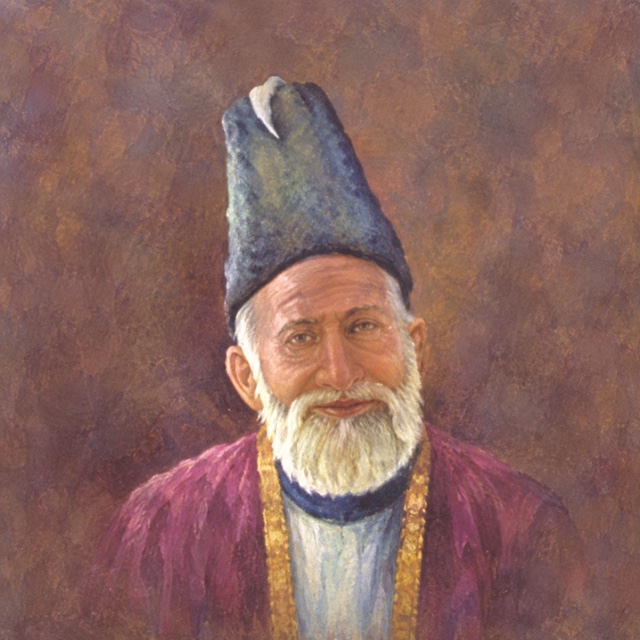
Ghalib Dehlavi
Mirza Asad Allah Beg Khan Ghalib (1797–1869) was a celebrated Persian and Urdu poet, writer, and thinker of the Indian subcontinent. Although he is now best known for his Urdu poetry, Ghalib himself regarded his Persian verse as the highest expression of his literary achievement. He holds an important place among the major Persian poets of the subcontinent.
Ghalib came from a family of Turkic ancestry whose forebears had migrated from Central Asia to India. He began writing poetry at an early age and soon distinguished himself through the reach of his imagination, depth of thought, and unusual turn of phrase. Philosophy, mysticism, human existence, fate, love, and the difficult questions of life recur throughout his work.
His Persian poetry bears the influence of Bedil Dehlavi and other leading poets of the Indian style. Ghalib wrote qasidas, ghazals, masnavis, qit‘as, and ruba‘iyat. His verse is known for subtle ideas, intricate themes, and intellectual density. Alongside the established Persian vocabulary, he sometimes used rare words associated with the Dasatiri tradition, giving his language a distinctive colour.
Ghalib’s Persian works include a divan, masnavis, qasidas, and a substantial body of prose. His letters also mark a turning point in the development of Urdu prose. His work in both languages has made him one of the defining literary figures of the subcontinent.
Ghalib died in Delhi in 1869. His influence remains alive in both Persian and Urdu literature.